A quiet five-minute practice can be more useful than an ambitious plan that stays on the calendar. For anyone exploring tai chi chair exercises for seniors at home, the practical goal is to use controlled weight shifts, steady foot placement, and a nearby support rather than testing the edge of balance. The routine should fit the person practicing, not the other way around.
Build the Session One Motion at a Time
Start where there is room to extend the arms without touching a wall or lamp. A sturdy chair can remain nearby even during standing practice. Wear clothing that permits easy movement, and choose footwear that feels steady on the floor. For this seated session, take a few ordinary breaths before deciding whether the position feels right. Small setup changes now can prevent repeated adjustments later.
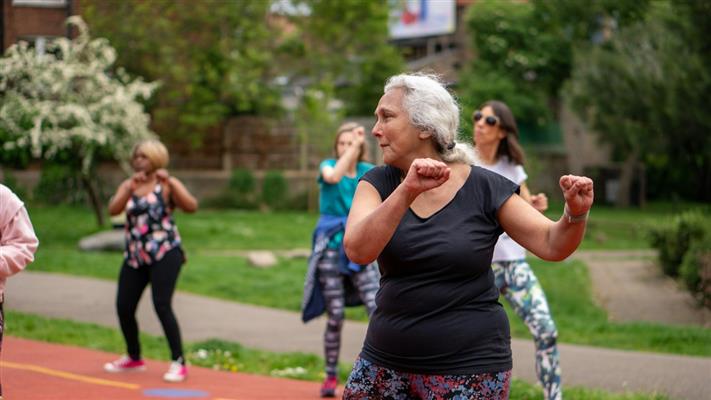
If practicing seated, let the feet stay in contact with the floor while the upper body turns a small amount. If standing, shift weight only within a range that feels controlled. There is no prize for making the motion larger. Keep the eyes softly forward unless a particular movement calls for a gentle turn. Moving slowly is useful only when the body remains relaxed and the breathing stays natural.
Use a Comfortable Range
A partner or instructor can watch for a chair that slides, a foot that loses contact, or a movement that causes strain. Feedback should make the practice simpler and safer, not pressure someone into copying another person’s range. This matters especially here because the day’s focus is to use controlled weight shifts, steady foot placement, and a nearby support rather than testing the edge of balance. Personal range can vary from morning to evening, and the practice can change with it.
End deliberately. Let the hands settle, feel both feet, and take several ordinary breaths. Stand slowly if seated, using support when needed. A clear finish helps prevent the abrupt jump from calm movement to rushing across the room. A routine that is easy to restart after a missed day is more practical than one built around perfection. Simply return to the first comfortable motion.
Ways to Build Confidence
Choose a firm chair that does not roll, swivel, or fold unexpectedly. Place it on a level surface. Sit far enough forward to plant both feet, yet keep enough seat beneath you to feel secure. Clear bags, rugs, pets, and low furniture from the reach of your hands and feet. Then rehearse the opening and closing steps once without adding extra repetitions. Knowing how to stop smoothly is just as useful as knowing how to begin.
Repeat a short sequence slowly enough to remember it without chasing the next step. Fewer motions make it easier to notice posture and tension. Add another movement on a later day rather than stuffing the first session like an overpacked suitcase. Watch for unnecessary gripping in the fingers or jaw. A softer effort often makes the path of the hands easier to follow.
Range can change from one side to the other. Keep both sides comfortable instead of forcing symmetry. A sore shoulder may need a lower hand position, while a sensitive knee may call for less weight shift or an entirely seated version. Finish by noticing how the body responds over the next few minutes. That observation can guide the length and range of the following practice.