Binding and Non-Binding Estimates: What Chicago Movers Provide

Reading a moving quote can be like reading the contract in another language. Let’s translate moving protection options for local moves chicago.

An estimate is just the mover’s best estimate. The final price will vary depending on the actual situation: the weight of your shipment, the duration of the move, any additional services you require. It may be higher or lower than the estimate provided.

A binding estimate guarantees the price for the above services. If the crew takes less time than you expected, you’ll pay the same rate. If it takes longer, well, you’ll pay the same rate. That level of certainty is a major draw, but only if your inventory matches what you told the mover.

Next there’s the binding-not-to-exceed option. You pay the lower of the estimate or the reality. People generally think of this as the most customer-friendly (though not all companies provide it).

For local Chicago moves, it usually means hourly cost based on crew size and a minimum time charge. The valuation is probably a time estimate, and then it’s up to how the day progresses. For long distance: volume or weight pricing.

What should you ask? A number of things:

– Will this estimate be binding, non-binding or capped?

– What triggers extra charges?

– Have there been a minimum number of hours?

– Are the costs for fuel, travel time, or stairs separated?

Don’t forget that last one. Unexpected extras are where many arguments begin.

If a mover doesn’t like the idea of putting your deal in writing, look elsewhere. Reputable movers will document what you agreed upon and why.

Choose the estimate type that works for your risk appetite. If you desire certainty, ask for a binding or cap number. If you can handle variability and your inventory planning is not yet clarified, non-binding can suffice.

What Junk Removal in Chicago Really Costs

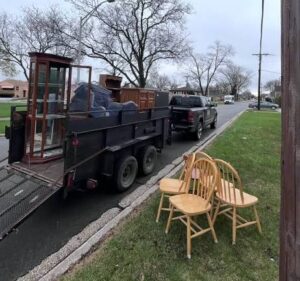
Pricing isn’t arbitrary in Chicago, but it seems that way. Most crews price by the volume. They determine how much of the truck your dumpster will take up and then quote based on that same day junk removal Chicago.

One couch?

A pretty affordable flat fee. Your entire garage? Several hundred dollars – no problem.

Labor is more important than you might imagine. Setting down the sofa in the ground floor of a single story bungalow takes mere minutes. The same sofa going up a fifth floor walk-up in Lakeview, no elevator, tight stairwell will take two men twice the time. Be prepared to see that.

This is the other part. Landfills and transfer stations will weigh your load, so wet drywall or used concrete will be more expensive than the identical truckload of cardboard boxes. Decent companies include this in their estimate. Less reputable companies will hit you with that bill while they’re at your curb.

Ask three questions before booking. Is the cost estimate inclusive of everything? Does it include stairs and long carries?

Is there an additional fee for mattresses or other electronics?

Some haulers charge an extra fee for those items since they require special handling.

Photos help. Send two or three and most companies will give you a rough estimate by text in a few minutes. Confirm the exact number on arrival, before anyone lifts a thing.

Timing should also be a consideration. Weekends book quickly, particularly at the end of the month when new leases come into effect. If you book on a Tuesday, you will occasionally find you will get a better time and sometimes a cheaper rate.

And finally, one more habit to develop: always get the quote in writing. A text is fine. If the crew shows up and the number has changed, you have something in writing to fall back on.

Questions to Ask Adelaide Concrete Contractors Before Hiring

A tape measure and a clear question can prevent a surprising amount of confusion later. Before arranging a site visit, anyone considering adelaide concrete contractors for selection and comparison of concrete contractors should start with a written brief, site photos, and a list of questions before treating any early figure or design idea as final.

Concrete project planning and surface preparation

Compare the complete scope, not one number

A useful comparison starts with the same written brief for every contractor. Ask each proposal to identify preparation, concrete work, access, finishes, edges, drainage-related items, removal, clean-up, timing assumptions, and exclusions. A lower total is not automatically better if important work sits outside the price. That early detail can feel fussy, but it is far cheaper than discovering the same issue after the work area has been opened.

Drainage and finished levels should be discussed before the layout is locked in. Show where water currently travels and mention any pooling after rain. Existing thresholds, pits, garden beds, neighbouring land, and connected surfaces all affect the conversation. Appropriate solutions depend on the site and applicable requirements.

Questions that expose assumptions

Do not alter structural, drainage, or reinforcement details from general online advice. The project team should work from the site conditions, intended use, relevant documentation, and local requirements. Useful homeowner preparation means gathering information and questions, not pretending a weekend search has replaced professional assessment.

Keep the accepted proposal, drawings, selections, correspondence, progress photographs, invoices, and handover notes together. Record agreed changes in writing. This small archive is helpful when checking what was included, planning related landscaping, or reviewing care instructions after the crew has left.

Record inclusions and exclusions

For quote comparisons, place matching items side by side and flag anything described differently. Confirm whether taxes, disposal, access equipment, preparation, protection, and clean-up are addressed. If one proposal is much lower, ask what creates the difference without assuming either a bargain or a problem.

Measure the length and width of the proposed area, then mark doors, gates, walls, drains, service points, trees, steps, and adjoining surfaces. Include several wide photographs and close views of problem spots. These notes support an initial discussion, while the contractor still needs to verify the site and final scope.

BeamMP Server Hosting: Your Very Own Crash Playground Without the Lag

Start With the Auth Key

Without it, nothing happens. Head over to the beammp server hosting page, log in, and make a key for your server. Think of it as your house key. Tweet the key in a Discord screenshot, and in the hour, a stranger is hosting a server on your account.

On the client side, you’ll need an unmodified BeamNG.drive. The server app is separate and free. You can download a build for either Windows or Linux and run it once in its own directory. It will then print a configuration file and stand by for commands.

Reading Server Config.toml

Open that file. It’s not that bad.

Enter your server name, max players, map, and then paste the key. Done. The map value is a level path – but get a typo in there and you’ll have a server that just spawns in the void.

Ask me how I know.

A friend of mine spent 40 minutes blaming his router until he spotted an extra slash in the level path.

Switch “Private” on if it’s only you and the crew. Turn it off if you want some anonymous outsiders walking in and bumping your bumper.

Home or Rented?

HOSTING FROM YOUR PC is free. You will require to do port forwarding and the default port is 30814 (TCP & UDP). Miss one and half your mates will join you and the other half will just stare at a spinner.

Some internet providers make this a no-go. Carrier-grade NAT is the common offender, and you won’t get around it with router tinkering. Once you’re there, you’re there.

A rented server cleans that up. You spend a few dollars a month, get an address, and the machine is on when your laptop sleeps. Buy from a host with a decent ping where your audience lives. A cheap box in the wrong part of the world will be as sluggish as driving through syrup.